Retaining Walls & Concrete Masonry
Strong, beautiful walls that hold back earth and create usable outdoor spaces.
Why Retaining Walls Matter
Retaining walls do more than just look nice. They serve critical structural purposes, holding back earth to create level areas on sloped properties. Without proper retaining walls, hillsides erode, water flows where it shouldn't, and usable yard space disappears.
Here in Merrillville and throughout Northwest Indiana, we see plenty of properties with challenging grades. Maybe your backyard slopes down toward the house, or you have a side yard that's too steep to use. A well-designed retaining wall can solve these problems while adding visual interest to your landscaping.
The key word is "well-designed." A retaining wall has to resist tremendous forces from the earth behind it. Get the engineering wrong and you'll have a failed wall within a few years. When we build retaining walls in Merrillville, we design them to last decades, not just seasons.
Types of Retaining Walls We Build
Different situations call for different retaining wall types. We build several kinds based on height, load, and aesthetic preferences:
- Poured Concrete Walls: The strongest option for high walls or heavy loads. We build forms, install rebar, and pour concrete to create monolithic structures that can last 50+ years.
- Concrete Block Walls: Interlocking blocks that create sturdy walls with various facing options. These go up faster than poured walls and cost less for moderate-height applications.
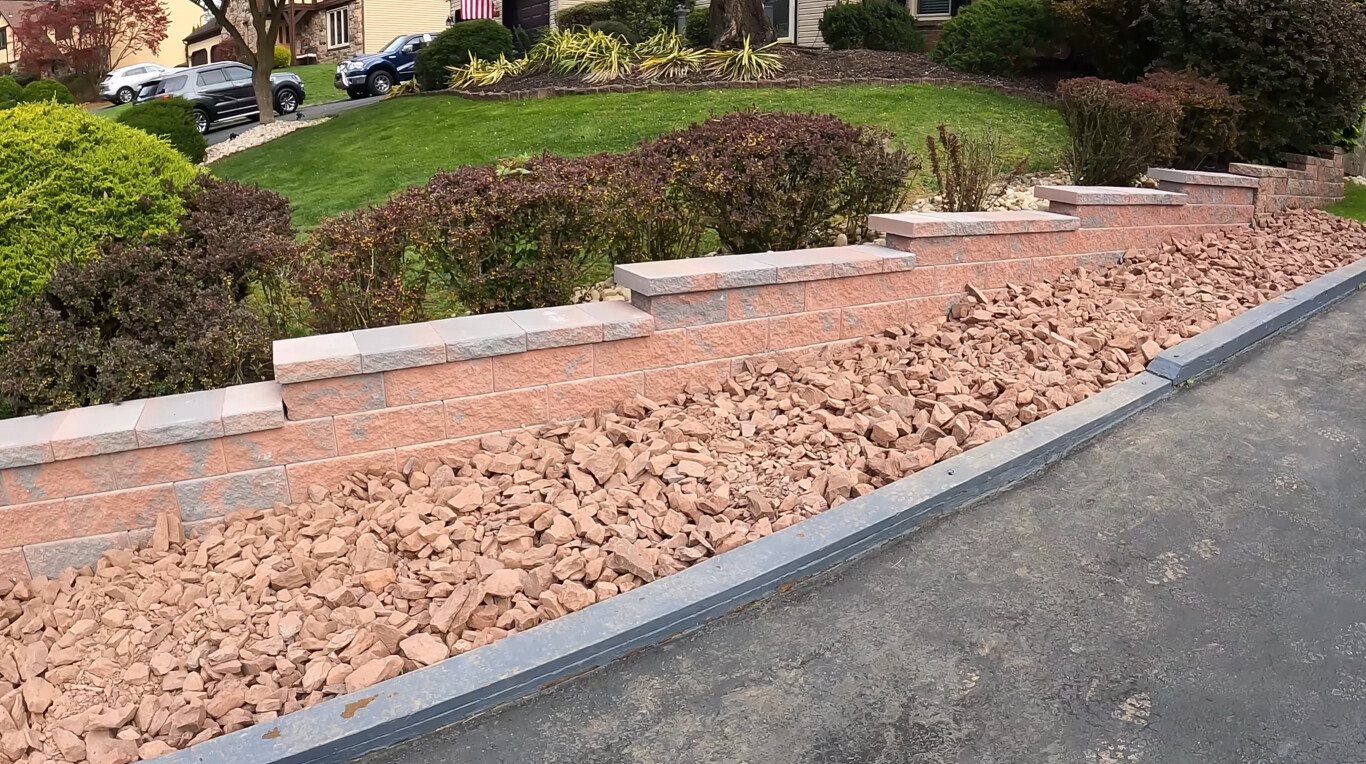
- Segmental Retaining Wall (SRW) Systems: Modular block systems designed specifically for retaining walls. These come in many colors and textures and work well for residential landscapes.
- Concrete Masonry Units (CMU): Standard concrete blocks that can be faced with stone, brick, or stucco to match your home's exterior.
- Gravity Walls: Massive structures that use their own weight to resist soil pressure. These work for shorter walls in specific situations.
The right choice depends on wall height, soil conditions, budget, and appearance goals. We'll recommend the best option for your specific situation. And if you're thinking about adding a patio or other features above or below the wall, we factor that into the design.
Engineering and Building Retaining Walls
Retaining walls over a certain height require engineered plans. In most cases, that threshold is 4 feet, but local requirements vary. Even shorter walls benefit from proper engineering if they're holding back significant loads or are in challenging soil conditions.
The engineering process starts with understanding what's behind the wall. Is it light garden soil or heavy clay? How much water flows through the area? What additional loads will the wall support, like driveways or buildings? An engineer calculates the forces involved and designs a wall strong enough to handle them safely.
Drainage is absolutely critical. Water buildup behind a retaining wall creates hydrostatic pressure that can push walls over or cause them to crack. We install drainage systems including weep holes, drain tile, and gravel backfill that carry water away harmlessly. Skipping drainage to save money is one of the most common mistakes we see with failed retaining walls built by others.
Foundation matters too. Retaining walls need solid footing below frost line, just like any other foundation structure. The footing spreads the load and prevents settling. For taller walls, we may need to install tie-backs or geo-grid reinforcement that anchors into the soil mass behind the wall.
Planning Your Retaining Wall Project
Before we start building, we need to understand what you want to accomplish. Are you creating a flat area for a patio or lawn? Stopping erosion? Adding garden beds at different levels? Each goal might lead to a different wall design.
We'll visit your property to evaluate site conditions. Slope, soil type, drainage patterns, and access for equipment all affect how we approach the project. Some sites are straightforward. Others present challenges that require creative solutions.
Timing matters for retaining wall projects. We can build in most weather, but extreme cold or wet conditions create complications. Spring through fall is ideal for most projects. Plan ahead so we can schedule your project during optimal conditions.
Budget is always a consideration. Retaining walls aren't cheap because they involve significant labor, materials, and often engineering costs. Working with an experienced concrete contractor ensures the investment is done right from the start. They add real value to your property by creating usable space and preventing erosion damage. We'll work within your budget while ensuring the wall is built properly.
Maintenance and Long-Term Performance
A well-built retaining wall needs minimal maintenance. Check drainage systems periodically to make sure they're not clogged with soil or debris. Keep an eye on any cracks or movement, though these shouldn't develop if the wall was built correctly. Clean the wall face occasionally to remove dirt and stains.
The biggest threat to retaining walls is poor drainage that develops over time. If you notice water pooling behind the wall or unusual wetness around it, address the issue promptly before it causes problems. Sometimes a simple adjustment to landscape grading solves it. Other times you might need to add drainage.
Vegetation near retaining walls requires thought. Plant roots can push blocks apart or crack concrete. Tree roots are particularly problematic. We can recommend appropriate plants and landscaping approaches that enhance your wall without threatening its structural integrity.
Common Questions About Retaining Walls
Ready to Tackle That Slope?
We'll visit your property, discuss options, and provide an honest recommendation about the best retaining wall solution for your situation.